
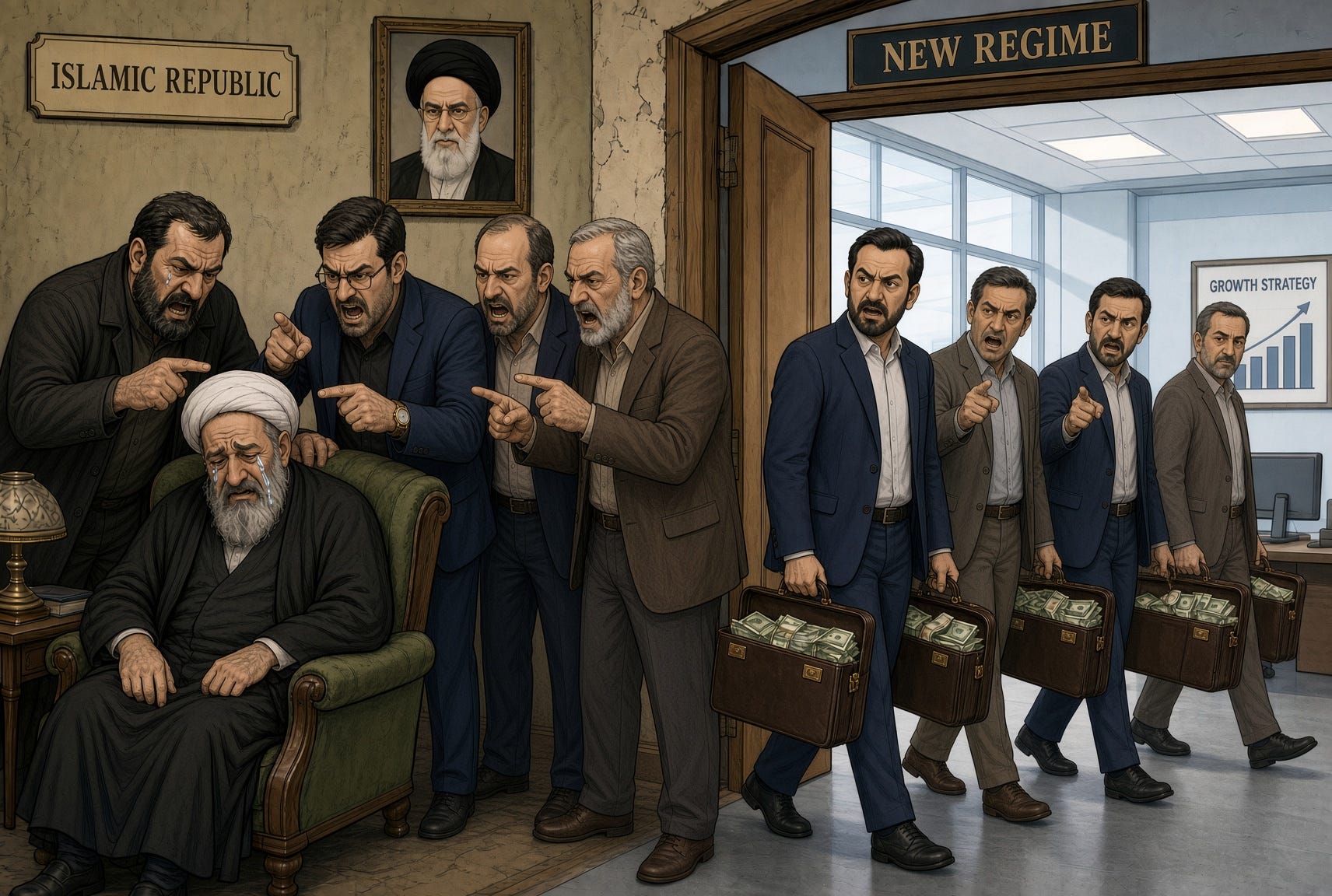
The Iranian regime can beat a crowd. It has done it. It has a harder time beating a week of unpaid wages, unsustainable inflation, a ration card that no longer covers the month, and a commercial class that can no longer turn loyalty into cash.
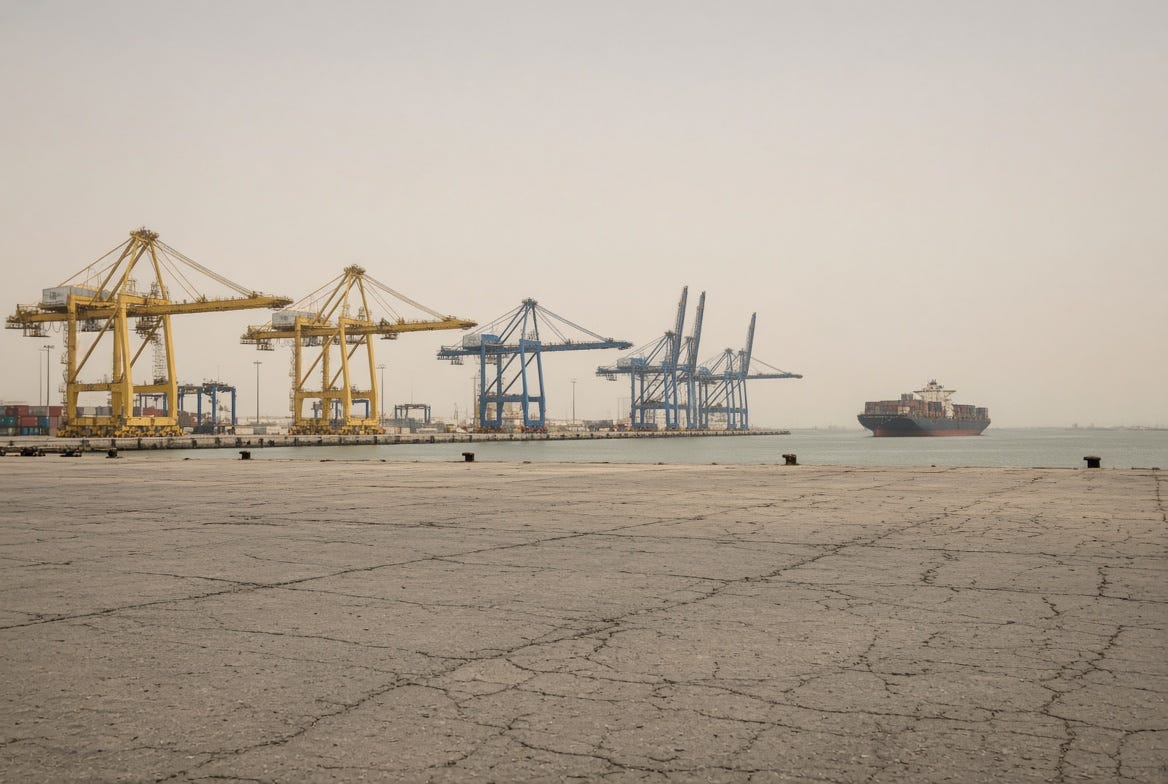
Shahid Rajaee is not closed. It is commercially quiet. That is the more important fact.
New footage from Iran’s main container hub near Bandar Abbas shows empty yards, idle cranes, and almost no truck cycle. AIS still picks up a dozen-plus contacts in the complex. A lot of them are tugs, support boats, and other non-container hulls — not a normal string of box ships working the terminal.
The port still exists. The commerce that pays the country does not.
Crude can hide. Boxes cannot.
That distinction matters.
Crude can hide in dark-fleet games and dedicated oil terminals. Containers cannot. Rajaee is the pipe for industrial inputs, machinery, parts, and the non-oil goods that keep factories and shops alive. It handles the overwhelming share of Iran’s container trade. When that yard goes quiet, the squeeze moves off the oil ledger and onto the real economy. Prices do not wait for a think-tank paper. They move when the boxes stop.
Washington wants that result. The maritime pressure on Iranian ports has been on and off all year. The latest Treasury campaign put shipping back in the kill box and said the point is to cut the regime off from remaining revenue. Empty pads at Rajaee are what that looks like on the water — if the pictures hold and if foreign liners stay away.
A port can stay standing and still lose its function. Cranes against a gray sky are not throughput. A tug on AIS is not a liner call. Watch the difference or you will misread the video.
The labor story at the same gate is already in the open. Contractors at Rajaee have cut shifts and laid people off as vessel traffic collapsed. Formal workers talk about short contracts and pay that no longer covers Bandar Abbas rent. A quiet terminal does not only starve import houses. It puts the men who used to move the boxes onto the street, into a currency that will not sit still.
September 8 was the date they feared
On September 8 the government let the third-tier gasoline price double — station-card fuel from 5,000 tomans a liter to 10,000 — while leaving the two subsidized monthly quotas untouched. It is the compromise of a state that remembers November 2019, when a sudden fuel shock became a national revolt, and January 2026, when the street came back in numbers the security forces answered with live fire.
They tried to make this one look technical. Officials said most drivers would not feel it. They said the extra money would go to livelihoods. They still put police, special units, and Basij around stations in Tehran, Mashhad, Shiraz, Karaj, Isfahan, Tabriz, Abadan, Qeshm. In Khorramabad a mounted machine gun went up before the price even moved. That is not a communications plan. That is a regime that knows what a pump can start when inflation has already eaten the rest of the month.
The street had already begun to move on the livelihood file. On September 7, retirees and labor groups were out in Kermanshah, Isfahan, Sanandaj, Tehran, Ahvaz, Shush, Ilam, Hamadan. Telecom and Social Security pensioners. Teachers. Job-seekers. Oil workers on offshore platforms and in Assaluyeh held Monday protests over wages, caps, and unpaid benefits. In Tehran the chant was blunt: we have no livelihood; we are sick of war.
This is not January 8. Do not pretend it is. January was a mass event that the apparatus drowned. What you have now is smaller, occupational, and stacked on top of empty tanks, a doubled unsubsidized price, wages that arrive late if they arrive, and inflation that does not take a day off. That combination is how a livelihood protest stops being a sector story.
The security state can beat a crowd. It has done it. It has a harder time beating unpaid wages, unsustainable inflation, a ration card that no longer covers the month, and a commercial class that can no longer turn loyalty into cash.
This does not first break the street
Here is the part most people miss.
This does not first break the street. It first breaks the deal inside the elite.
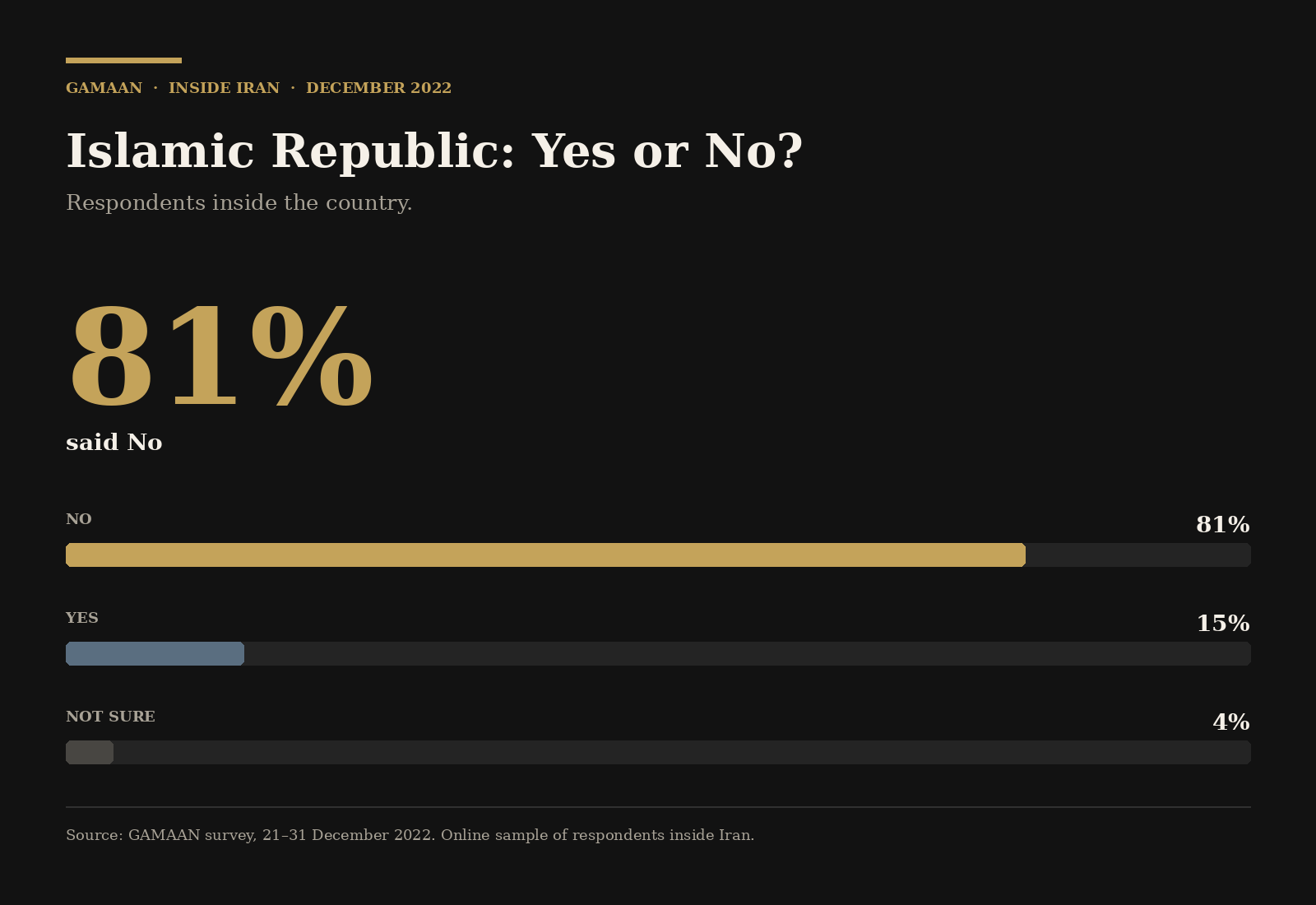
Iran is hard to poll. The last serious public survey that got through, GAMAAN in late 2022, still found 81 percent inside the country saying “No” to the Islamic Republic and only 15 percent saying “Yes.” Earlier that year the same group found only 22 percent naming the Islamic Republic as their preferred system.
The support base is a minority. And the part of that minority that matters is not the slogans. It is the people who stay loyal because the system builds and protects fortunes.
A quiet Rajaee means that product is failing.
If you cannot move boxes, you cannot reliably convert political loyalty into cash. You cannot service the networks. You cannot promise the next generation of insiders that the arrangement still pays. Inflation does the rest. It taxes whatever cash they still hold while the yard sits empty. At that point the oligarchs stop being an asset. They become a class with stranded wealth, shrinking optionality, and a regime that will spend them before it spends itself.
The September 8 deployment is the public half of the same problem. The state can put guns at the station. It cannot make the yard fill itself, and it cannot make the rial hold. One is theater. The other is the ledger.
Two choices. Incentives, not romance.
They then have two choices.
Turn on the power base early enough to keep some of the money and live long enough to spend it. Or dig in and ride the apparatus into economic ruin.
My bet follows the money. The security state can run on coercion for a long time. It cannot indefinitely keep a commercial elite loyal once the commercial machine stops clearing and inflation eats what is left. When the regime can no longer deliver fortunes, those people provide zero function. They will not die for a slogan. They will hedge, split, cut deals, and eventually peel off the power base.
That is not romance. It is incentives.
Do not declare the regime finished off one video
Do not declare the regime finished off one video. Do not declare a revolution off one fuel-price morning.
Watch liner calls. Watch truck gates. Watch rail out of Bandar Abbas. Watch whether the import houses still get paid. Watch whether the labor actions stay occupational or find each other. Satellite can tell you the berths are thin. Only repeatable cargo movement tells you the machine is back.
If Rajaee stays in this state, the public eats the shortage first. The oligarchs make the political decision second. The clock is already running.
Thanks for reading - James Frinzi